
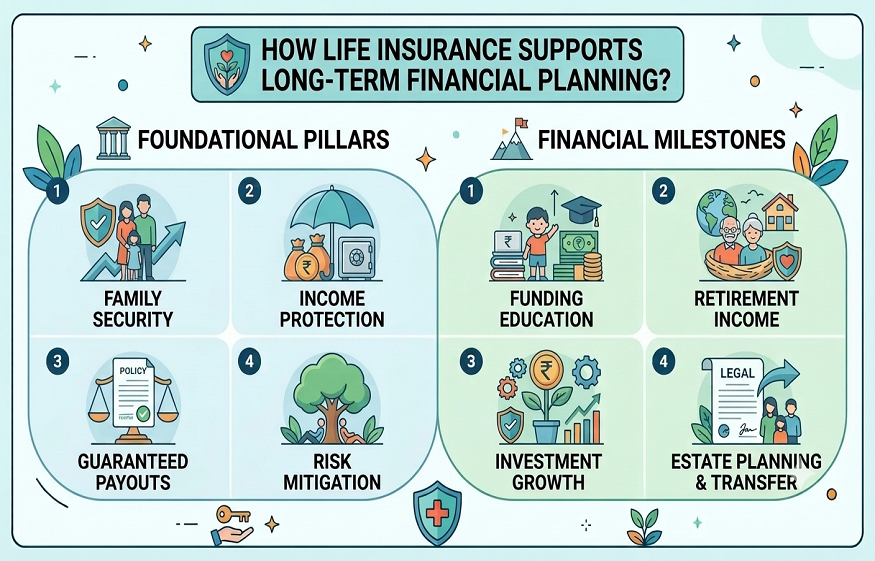
Long-term financial planning is about preparing for both expected goals and unexpected events. While saving and investing can help build wealth over time, financial planning should also consider what happens if an earning member is no longer around to support the family’s financial needs. This is where life insurance can play an important role.
Life insurance provides financial protection to the policyholder’s dependants in the event of the policyholder’s death, subject to the terms and conditions of the policy. When incorporated into a broader financial plan, it can help protect long-term goals, manage liabilities, and provide financial stability for loved ones.
Whether you are considering term insurance or exploring general life insurance options, understanding how life insurance fits into your overall financial plan can help you make a more informed decision.
What Role Does Life Insurance Play in Financial Planning?
Financial planning typically involves managing income, expenses, savings, investments, liabilities, and future goals. Insurance serves a different but complementary purpose: it helps protect the financial plan against risks that could otherwise disrupt it.
For example, a family may be saving for a child’s education or planning to repay a home loan over several years. If the primary earning member dies unexpectedly, these plans could become difficult to maintain. Adequate life insurance can provide a financial cushion to help dependants meet such obligations.
1. Protecting Your Family’s Income
For many households, the loss of an earning member can create a significant financial gap. Life insurance can provide a death benefit to the nominee, helping the family manage expenses and maintain financial stability.
The coverage amount should be considered in relation to factors such as current income, household expenses, outstanding liabilities, dependants, and future financial goals.
The objective is not simply to purchase the largest possible policy but to determine an appropriate level of protection based on your family’s needs.
2. Supporting Long-Term Financial Goals
Financial goals often have timelines extending over many years. These may include children’s education, marriage expenses, retirement planning, or purchasing a home.
Life insurance can help protect these goals from being disrupted by the premature death of the person responsible for funding them. The insurance payout can provide the family with additional financial resources to continue working towards important objectives.
This makes life insurance a risk-management component of a broader financial strategy rather than a replacement for regular savings or investments.
3. Helping Manage Outstanding Liabilities
Loans can remain outstanding for several years. A home loan, education loan, or other significant borrowing can become a financial burden for family members if the primary borrower dies unexpectedly.
Life insurance coverage can provide funds that may help the family manage outstanding liabilities, subject to the policy terms and the family’s financial decisions.
When determining the appropriate sum assured, consider existing and expected liabilities along with other financial responsibilities.
4. Protecting Children’s Future
Parents often plan their finances around major milestones in their children’s lives. Education and other future expenses can require substantial financial resources.
Life insurance can help ensure that the financial plan for these goals has an additional layer of protection. If an earning parent dies prematurely, the policy payout can help the family continue funding these objectives.
When selecting coverage, consider the child’s age, expected education costs, the time remaining until the goal, and the resources already available.
5. Providing Financial Stability During Difficult Times
The financial consequences of losing a family member can extend beyond immediate expenses. Dependants may need time to adjust their finances, manage household costs, and make decisions about their future.
A life insurance payout can provide a financial buffer during this period. It can help the family meet essential expenses while they reorganise their finances and determine how to manage their long-term needs.
6. Complementing Savings and Investments
Savings and investments are important components of financial planning, but they serve different purposes from insurance.
Savings can help meet planned expenses and create liquidity, while investments are generally used to build wealth over time. Life insurance primarily provides financial protection against the risk of premature death.
Combining these components can create a more balanced financial strategy. Instead of relying entirely on accumulated savings to protect dependants, life insurance can provide dedicated financial protection.
7. Considering Inflation in Long-Term Planning
Financial needs can increase over time because of inflation. A household expense that seems manageable today may cost significantly more in the future.
When determining life insurance coverage, consider future financial requirements rather than looking only at current expenses. This is particularly relevant for long-term goals such as education, retirement support, and loan repayment.
Regularly reviewing your financial plan can help you determine whether your existing insurance coverage continues to be appropriate.
8. Reviewing Coverage as Your Life Changes
Financial responsibilities often change throughout life. Marriage, having children, purchasing a home, changing jobs, starting a business, or taking on new liabilities can affect the amount of protection required.
For this reason, life insurance should be reviewed periodically as part of the broader financial planning process.
If your income or financial responsibilities increase significantly, your existing coverage may need to be reassessed.
How to Include Life Insurance in a Financial Plan
A practical approach is to:
- Assess your family’s current and future financial needs.
- Calculate outstanding and expected liabilities.
- Identify major long-term financial goals.
- Consider inflation when estimating future expenses.
- Determine an appropriate level of life cover.
- Compare policy terms, coverage, exclusions, and premiums.
- Review your nominee details regularly.
- Reassess your coverage after major life events.
These steps can help ensure that insurance is aligned with the rest of your financial strategy.
Life Insurance Is More Than a Policy
Long-term financial planning is not only about growing wealth; it is also about protecting the financial foundation that supports your goals. Life insurance can help provide that protection by creating a financial safety net for dependants.
Whether you are considering term insurance or general life insurance, focus on how the policy fits into your overall financial situation rather than evaluating it in isolation. Consider your family’s needs, liabilities, future goals, affordability, and the level of protection required.
A well-structured financial plan combines protection, savings, investments, and responsible financial management. By including life insurance as part of this framework, you can work towards your long-term goals while also preparing your family financially for uncertainties along the way.